Harbors of Vulnerability: Why America's Ports Are the Weakest Link in National Emergency Response
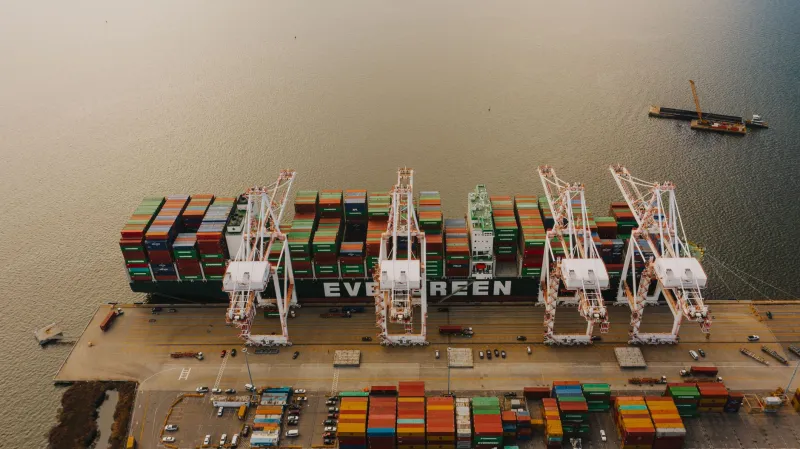
When most Americans think about emergency preparedness, they envision stockpiled supplies, evacuation routes, and coordinated first responder networks. Rarely does the mental image include a container ship idling offshore, unable to offload pallets of medicine, generators, or food staples because the receiving terminal lacks the crane capacity, the labor, or the operational resilience to process it. Yet that scenario is far from hypothetical. It is a systemic risk embedded in the very infrastructure upon which American disaster relief depends.
The United States moves approximately 70 percent of its trade volume through its seaports. In the context of emergency response, that figure carries enormous weight. Humanitarian supplies, pharmaceutical shipments, fuel, and construction materials all flow through these maritime gateways. When a port falters — whether from a cyberattack, a labor disruption, extreme weather, or sheer infrastructural overload — the downstream consequences ripple outward with devastating speed.
The Congestion Problem No One Wants to Name
The 2021 supply chain crisis offered Americans a rare, unfiltered glimpse into what port dysfunction looks like in practice. At the Port of Los Angeles and the Port of Long Beach — which together handle roughly 40 percent of all containerized imports entering the country — hundreds of vessels sat anchored offshore for weeks. Store shelves thinned. Manufacturers idled. The disruption, triggered largely by pandemic-era demand shifts, exposed a system with almost no tolerance for surge conditions.
Now consider that same congestion scenario unfolding not during a consumer goods crunch, but in the immediate aftermath of a major natural disaster or a coordinated infrastructure attack. Emergency managers attempting to route critical supplies into affected regions would be competing with a backlogged commercial pipeline they have no authority to bypass. Federal emergency stockpiles, however robustly maintained, cannot substitute indefinitely for the sustained import flow that keeps hospitals, communities, and relief operations functioning.
The congestion problem is not merely a logistics inconvenience. It is a preparedness failure masquerading as a commercial inefficiency.
Aging Infrastructure and the Modernization Deficit
Beyond congestion lies a deeper structural concern: much of America's port infrastructure is simply old. The American Society of Civil Engineers has repeatedly flagged port facilities in its infrastructure report cards, citing inadequate channel depths, outdated terminal equipment, and deteriorating intermodal connections as persistent liabilities. Many major ports were designed for a previous generation of vessel sizes. Today's ultra-large container ships, which carry two to three times the cargo of their predecessors, can only be fully accommodated at a handful of American terminals.
This modernization deficit matters enormously in a crisis. A port that cannot efficiently process high-volume, time-sensitive shipments during normal operations will be catastrophically overwhelmed when emergency relief cargo begins competing for berth space and crane time. Redundancy — the ability to shift operations to alternative facilities when primary terminals are compromised — is limited when the alternative facilities face the same structural constraints.
The federal government has made incremental investments through infrastructure legislation in recent years, but the scale of need consistently outpaces the pace of improvement. For emergency preparedness advocates, the gap between what exists and what resilience demands remains unacceptably wide.
The Foreign Dependency Dimension
Among the most underappreciated vulnerabilities embedded in American port infrastructure is the degree to which critical terminal operations depend on foreign-manufactured equipment. The cranes that load and unload the vast majority of containerized cargo at U.S. ports are predominantly produced by a single Chinese state-affiliated manufacturer. Cybersecurity researchers and defense analysts have raised concerns about the potential for remote access capabilities built into this equipment — concerns that carry particular weight when one considers the role these cranes would play in any large-scale emergency logistics operation.
Beyond the equipment question, American ports are also deeply reliant on foreign-flagged vessels and foreign-owned shipping lines to move the goods that emergency response depends upon. In a geopolitical crisis that disrupts international shipping agreements or triggers retaliatory trade measures, the United States would have limited domestic maritime capacity to compensate. The domestic merchant marine fleet has declined substantially over decades, leaving the nation with fewer American-flagged vessels capable of supporting emergency sealift operations than at any point in the modern era.
What Resilience Actually Requires
Building genuine resilience into America's port system demands a multi-layered response that bridges commercial infrastructure policy, national security planning, and community-level preparedness advocacy.
At the federal level, meaningful resilience requires accelerated investment in terminal modernization, with explicit preparedness benchmarks attached to funding eligibility. Ports should be required to demonstrate surge capacity planning — documented protocols for prioritizing emergency cargo, coordinating with FEMA and state emergency management agencies, and maintaining operational continuity under degraded conditions. Cybersecurity standards for port operational technology, including crane systems and terminal management software, must be strengthened and enforced with the same urgency applied to power grid protections.
At the regional level, port authorities and state emergency management offices need formalized coordination frameworks that are exercised regularly, not merely documented. Too often, the relationship between commercial port operators and emergency managers is informal and untested until a crisis forces improvisation. Tabletop exercises that simulate port disruption scenarios — including cyberattacks, extreme weather events, and labor stoppages — should be standard practice rather than the exception.
The domestic maritime industry also warrants renewed policy attention. Strengthening the Jones Act workforce, incentivizing American-flagged vessel construction, and maintaining a ready reserve of sealift capacity are not merely economic or military considerations. They are preparedness imperatives with direct consequences for the nation's ability to respond to large-scale disasters.
What Communities Can Do Right Now
For citizens and local advocates, port resilience may feel like a distant policy concern — the province of federal agencies and international trade negotiators. But communities located near major port facilities have both the standing and the responsibility to engage directly with this issue.
Local preparedness coalitions can advocate for transparency from port authorities regarding emergency response planning. Requesting public access to port continuity-of-operations plans, attending port commission meetings, and engaging state legislators who oversee transportation and emergency management committees are concrete actions that build civic pressure for accountability.
Communities further inland should also examine their supply chain dependencies honestly. Which critical goods — pharmaceuticals, medical equipment, emergency fuel supplies — arrive primarily through a single port corridor? Diversifying local stockpiles and working with regional emergency managers to identify alternative sourcing pathways can reduce, though not eliminate, exposure to port disruption scenarios.
Business associations, hospital systems, and municipal governments should jointly map their import-dependent supply chains and incorporate port disruption as a named risk in their continuity planning. The 2021 supply chain crisis demonstrated that these disruptions are not theoretical. The question is not whether they will recur, but whether communities will be better positioned to absorb them when they do.
A Gateway That Must Not Be Allowed to Fail
America's ports are, in the most literal sense, gateways — points through which the nation's material lifelines pass. In moments of stability, their vulnerabilities remain largely invisible, obscured by the routine hum of commercial activity. In moments of crisis, those same vulnerabilities can become the difference between a disaster that is managed and one that cascades beyond recovery.
A nation that takes preparedness seriously cannot afford to treat its maritime infrastructure as a secondary concern. The logistics war that would unfold in the wake of a major port disruption during a national emergency would be silent only until it wasn't — and by then, the cost of neglect would be measured not in policy papers, but in lives.

