Block by Block: How Hyperlocal Preparedness Networks Are Redefining Community Survival
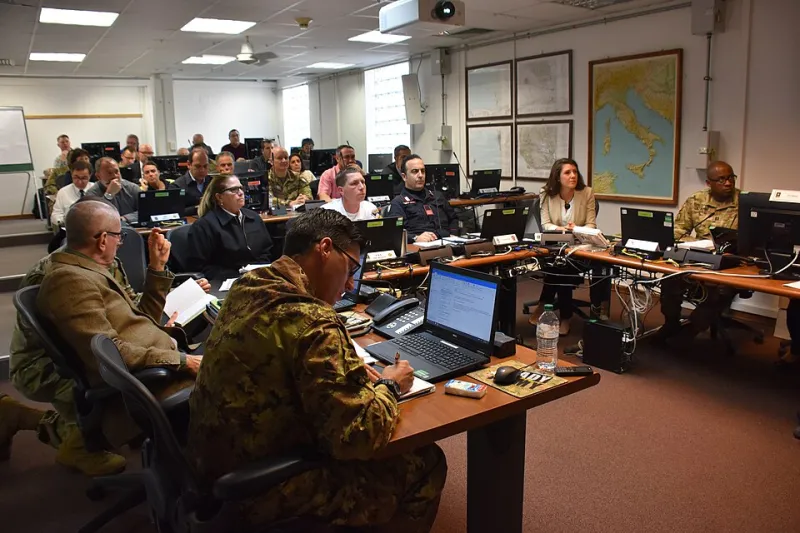
Photo: U.S. Army USAG-V by Chiara Mattirolo, Public domain, via Wikimedia Commons
When Government Help Is Hours Away, Neighbors Are Already There
In the immediate aftermath of a major disaster—whether a hurricane, earthquake, wildfire, or severe winter storm—official emergency services are frequently overwhelmed. Response times stretch from minutes into hours. Communication systems falter. Roads become impassable. In these critical windows, the difference between life and death often comes down to one variable: whether a neighborhood was organized before the emergency began.
This is the core premise behind a growing movement in civic preparedness that prioritizes hyperlocal, community-driven response networks. Rather than waiting for top-down coordination, forward-thinking neighborhoods across the country have built their own systems of mutual aid, shared resources, and block-by-block communication—and the results are compelling.
The Cascadia Rising Lesson: Portland's Neighborhood Emergency Teams
Following the sobering projections of a Cascadia Subduction Zone earthquake—which scientists estimate could affect millions of residents across the Pacific Northwest—Portland, Oregon, became an early laboratory for neighborhood-level preparedness. The city's Neighborhood Emergency Team (NET) program trained ordinary residents in basic search and rescue, first aid, and light firefighting techniques. Crucially, the program also helped neighborhoods map their own vulnerabilities: who lived alone, who had mobility limitations, which households stored medical equipment, and where shared supplies could be cached.
During the 2020 windstorm events that knocked out power to tens of thousands of Portland residents, NET-organized neighborhoods reported faster welfare checks on vulnerable residents and more efficient resource sharing—all without waiting for city coordination. The infrastructure was already in place because residents had built it themselves.
The Block Captain Model: A Scalable Framework for Any Community
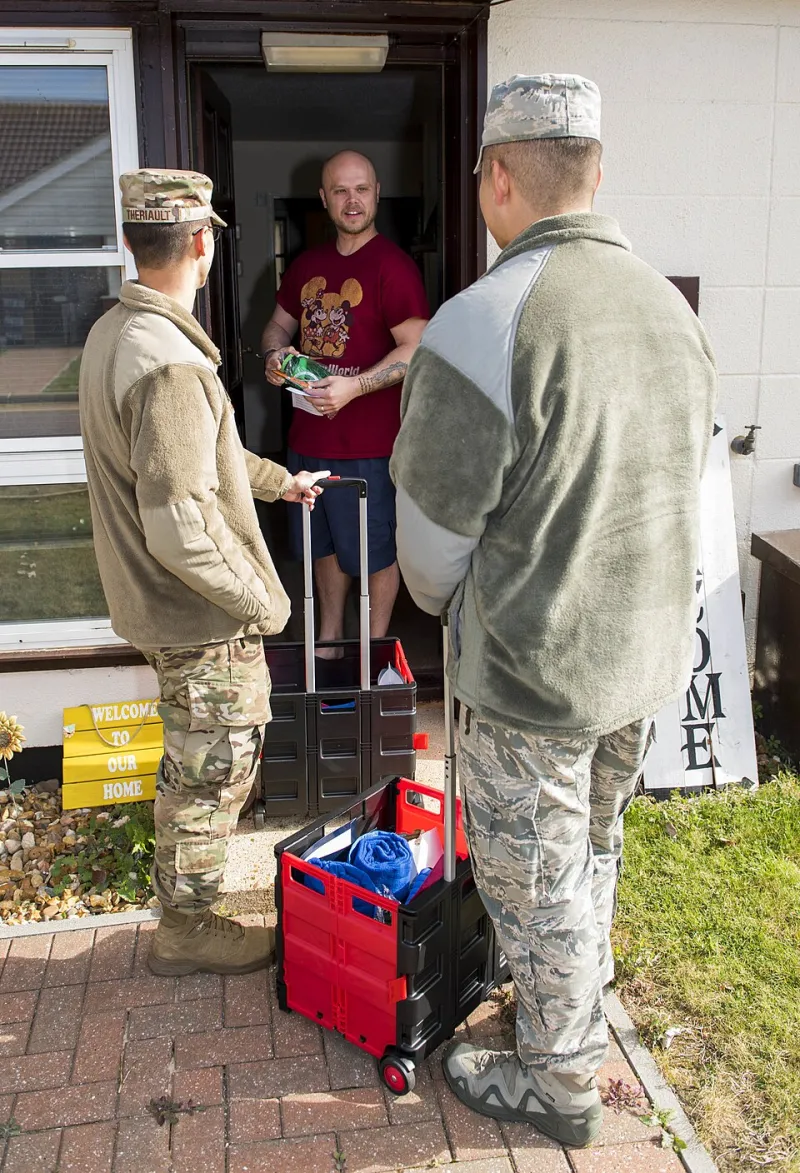
One of the most replicable models emerging from successful community preparedness programs is the block captain system. In this structure, a designated resident on each city block or rural road segment serves as a communication hub, resource coordinator, and welfare liaison for their immediate neighbors.
Block captains are responsible for maintaining a simple but critical database: the names and contact information of every household on their block, any special needs or vulnerabilities, and a rough inventory of resources those households are willing to share during an emergency—generators, water storage, medical supplies, tools, or vehicles with four-wheel drive.
In Galveston, Texas, where Hurricane preparedness is a civic imperative, several neighborhoods formalized block captain networks following Hurricane Ike in 2008. When subsequent storms threatened the region, these networks allowed residents to coordinate evacuations, check on elderly neighbors, and share critical information in real time—often faster than official emergency alerts reached the same households.
Shared Resource Inventories: The Preparedness Commons
Beyond communication, the most tangible benefit of organized neighborhood networks is the concept of a shared resource inventory. No single household can reasonably stockpile every item needed to weather a prolonged emergency. But when a neighborhood of fifty households pools its awareness of available resources, the collective capacity becomes substantial.
Communities in fire-prone areas of California's Sierra Nevada foothills have formalized this concept through neighborhood preparedness councils that maintain shared caches of items such as chainsaws, water pumps, medical kits, and emergency food supplies stored in central locations accessible to all members. During the 2021 Caldor Fire, several communities with such arrangements reported that residents were able to assist one another with property protection and evacuation support in ways that would have been impossible without prior organization.
The key to making shared inventories work is simplicity and regular maintenance. Digital tools like shared spreadsheets or community apps can help, but many successful programs use low-tech solutions—printed rosters updated annually and distributed to every participating household—precisely because they function without electricity or internet connectivity.
Mutual Aid Protocols: Structure That Enables Spontaneous Action
One of the paradoxes of emergency response is that effective improvisation requires preparation. Communities that perform best during crises are those that have agreed in advance on protocols for common scenarios: who takes responsibility for checking on elderly residents, how medical emergencies are escalated, where people should gather if they need to evacuate, and how decisions are made when communication is partial or unreliable.
Formal mutual aid agreements—even simple, one-page documents signed by willing participants—give neighborhoods a legal and ethical framework for action. They clarify expectations, reduce hesitation, and help volunteers act with confidence rather than uncertainty.
In rural Montana, where distances between neighbors can be significant and emergency services may be far away, several county-level preparedness coalitions have developed mutual aid templates specifically designed for low-density communities. These templates address livestock care, well-water access, and road clearing—concerns that urban preparedness models often overlook—demonstrating that the block captain concept can be adapted to nearly any community geography.
Measuring What Works: Recovery Time and Casualty Reduction
The case for community-based preparedness is not merely anecdotal. Research conducted by the Natural Hazards Center at the University of Colorado Boulder and similar institutions consistently finds that social cohesion—the degree to which community members know and trust one another—is one of the strongest predictors of post-disaster recovery speed. Communities with high social cohesion recover faster, experience fewer secondary casualties, and return to economic normalcy more quickly than socially fragmented communities facing similar events.
Organized preparedness networks are, in many ways, a structured method for building social cohesion before a disaster forces it. The relationships formed during neighborhood preparedness meetings, tabletop exercises, and resource-mapping sessions become the social infrastructure that functions when physical infrastructure fails.
Getting Started: Building Your Network Before You Need It
For communities that have not yet formalized a preparedness network, the barrier to entry is lower than many residents assume. FEMA's Community Emergency Response Team (CERT) program provides free training and organizational support to neighborhoods across the country. Local fire departments and emergency management offices frequently offer resources, guidance, and sometimes funding for neighborhood preparedness initiatives.
The most important first step is simply beginning the conversation. A neighborhood meeting—whether organized through a homeowners' association, a faith community, a school, or an informal gathering—can surface both the resources and the motivated individuals that every community already possesses.
America's resilience has always been rooted not in the capacity of its institutions alone, but in the willingness of its citizens to look after one another. The neighborhoods that internalize this truth before disaster arrives are the ones that will emerge from it most intact.