Answering No One: The Quiet Collapse of America's Volunteer Emergency Services
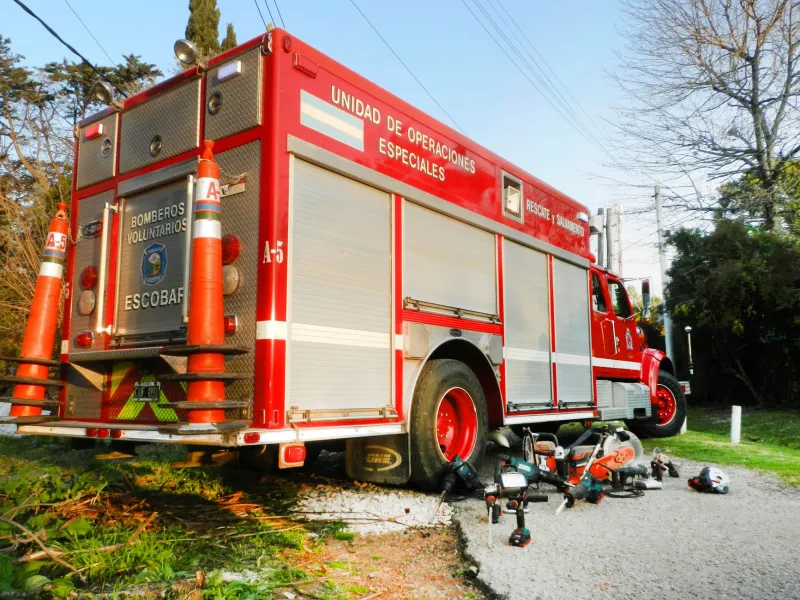
On a Tuesday evening in Harlan County, Kentucky, the fire station sits dark. Not because there is no emergency—there is always the possibility of one—but because the last three active volunteers submitted their resignations within the same calendar month. The county, like hundreds of others scattered across the American interior, is not facing a funding shortfall in the traditional sense. It is facing something harder to fix with a budget line: a collapse of the human infrastructure that emergency response has depended upon for over a century.
America's volunteer emergency services apparatus is eroding at a pace that should alarm every elected official, civic planner, and household head in the country. According to the National Volunteer Fire Council, the United States lost nearly 10 percent of its volunteer firefighters over the past two decades, a decline that has accelerated sharply since 2020. Volunteer fire departments account for nearly 70 percent of all fire departments in the nation. When they fail, there is rarely a paid department waiting in reserve.
A Perfect Storm, Years in the Making
The crisis did not arrive overnight. It is the product of overlapping structural forces that have quietly dismantled the conditions under which volunteerism once thrived.
Begin with economics. In previous generations, a significant portion of rural and small-town America operated on single-income households or relied on agricultural rhythms that allowed for flexible schedules. Today, many working-age adults hold two jobs simply to maintain financial stability. The time commitment required to serve as a volunteer firefighter or emergency medical technician—often exceeding 200 hours annually for training alone, before a single call is answered—is simply incompatible with the economic realities facing the average American family in 2025.
Demography compounds the problem. Rural communities are aging at a rate that outpaces most projections. The volunteers who kept departments operational through the 1980s and 1990s are now in their sixties and seventies. Many have aged out of physically demanding emergency roles. Their replacements, the younger residents who might once have filled the gap, are leaving for metropolitan areas in search of employment. What remains is a demographic inversion: the communities most dependent on volunteer services are precisely those least able to sustain them.
Liability has become an unexpected accelerant. Increased litigation risk has made some prospective volunteers reluctant to commit. Training standards, while necessary, have grown more rigorous—and more time-consuming—in response to legal exposure. Some rural departments report that the paperwork burden alone has driven away otherwise willing members who feel overwhelmed before they have ever responded to a single incident.
Civic Disengagement and the Trust Deficit
Beneath the economic and demographic pressures lies a cultural shift that is harder to quantify but equally consequential. Volunteerism broadly—across civic organizations, religious institutions, and community associations—has been in measurable decline for decades. Robert Putnam's foundational research on social capital, updated repeatedly by subsequent scholars, consistently demonstrates that Americans are participating in collective civic life at lower rates than at any point in the modern era.
Volunteer emergency services were never immune to this trend. They depended on the same sense of communal obligation, the same assumption that neighbors owe something to neighbors, that once animated Rotary clubs and town councils. As that social contract has frayed, recruitment has suffered in ways that no awareness campaign or sign-up bonus has fully reversed.
Departments across the country report that when they do attract new members, retention is the greater challenge. Young recruits who join with genuine enthusiasm frequently withdraw within two years, citing time demands, family pressure, and—critically—a sense that the broader community does not fully value their sacrifice. Recognition matters. When it is absent, commitment often follows.
Communities Confronting the Consequences
In Pocahontas County, West Virginia, officials have begun quietly mapping response time projections under various volunteer depletion scenarios. The results, which local emergency management coordinators describe as sobering, suggest that some parts of the county could face response times exceeding 45 minutes for structure fires under worst-case staffing conditions. At that threshold, the difference between a contained fire and a total loss—or between a survivable cardiac event and a fatality—is not marginal. It is categorical.
Similar calculations are being made in rural Minnesota, in the agricultural counties of eastern Oregon, and in the outer-ring suburbs of mid-sized Midwestern cities where population growth outpaced the development of paid fire and EMS services. The problem is not confined to the most remote corners of the country. It is migrating toward the metropolitan fringe.
Some communities have responded by consolidating departments, a move that extends coverage areas but also extends response times and strains the volunteers who remain. Others have explored regionalization agreements that allow neighboring jurisdictions to share resources—a pragmatic adaptation that nonetheless papers over the underlying recruitment failure rather than addressing it.
Policy Levers Worth Pulling
The problem is structural, and structural problems require structural responses. Several policy interventions have demonstrated measurable impact and deserve broader adoption.
Federal and state tax incentives for active volunteer service represent perhaps the most direct tool available. Several states, including Pennsylvania and Maryland, have implemented property tax credits for certified volunteers. Expanding these programs nationally, and increasing their value to reflect the true economic cost of service, would meaningfully lower the barrier to participation for working-age adults weighing time against financial obligation.
Employer partnership programs that provide partial compensation or scheduling flexibility for volunteer emergency personnel deserve renewed federal attention. The Volunteer Emergency Services Recruitment and Retention Act has been introduced in various forms in Congress over the years. A modernized version—one that includes small business incentives and liability protections for employers who accommodate volunteer schedules—could unlock a significant reservoir of potential recruits currently sidelined by inflexible work arrangements.
Training modernization is equally critical. Streamlining certification pathways, expanding online and hybrid training options, and creating tiered service roles that allow community members to contribute meaningfully without committing to full operational status would broaden the recruitment pool substantially. Not every willing neighbor needs to enter a burning structure. Administrative support, logistics, and community liaison roles keep departments functional and create pathways to deeper engagement over time.
Civic education at the secondary and post-secondary levels must be reimagined to include emergency preparedness and community service as genuine subjects of instruction, not afterthoughts. Young people who understand how emergency response systems work—and who recognize their own stake in sustaining them—are far more likely to consider volunteer service as a legitimate adult commitment.
The Irreversibility Risk
What makes the current trajectory particularly concerning is the question of reversibility. Institutions that close rarely reopen. Departments that dissolve take with them not just equipment and station infrastructure but institutional knowledge, community trust, and the social networks through which future volunteers are recruited. Once a department is gone, reconstituting it requires years of effort and resources that cash-strapped rural communities rarely possess.
The window to act is not indefinite. Communities that treat the volunteer recruitment crisis as a manageable inconvenience rather than a systemic emergency risk arriving at a point of no return before the severity of the situation becomes undeniable. By then, the cost—measured in property destroyed, lives lost, and communities further destabilized—will far exceed whatever investment in recruitment, retention, and structural reform might have prevented it.
America's preparedness depends on people willing to answer the call. Ensuring that enough of them exist—and that the conditions of civic and economic life make answering possible—is not a niche concern for rural county commissioners. It is a national readiness imperative.