The Long Wound: How America's Disaster Recovery Plans Abandon Communities to a Mental Health Crisis That Arrives After the Cameras Leave
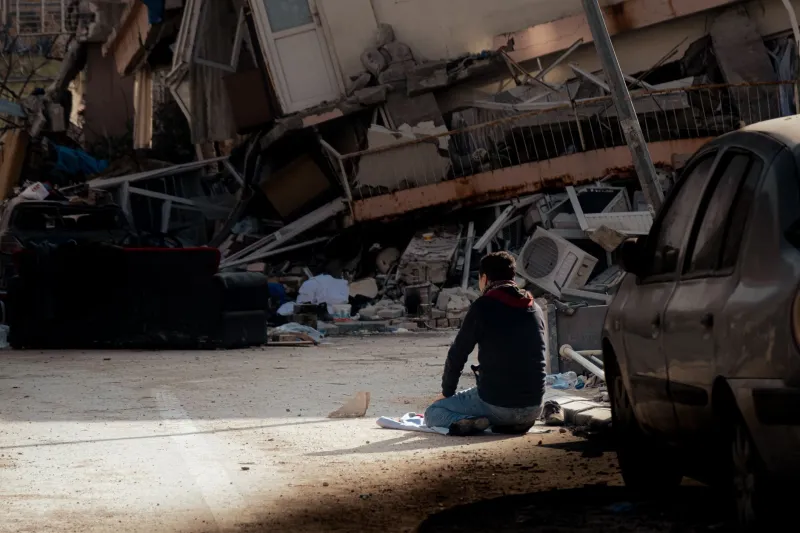
In the weeks following a catastrophic disaster — a hurricane, a wildfire, a catastrophic flood — the national response apparatus mobilizes with considerable speed. Search-and-rescue teams deploy. Emergency shelters open. Federal aid applications are processed. Satellite trucks line the perimeter of devastated neighborhoods. For a brief and intense window, the affected community becomes the center of national attention.
Then the cameras leave.
What follows that departure is a slower, quieter, and in many respects more damaging emergency — one that current preparedness frameworks are almost entirely unequipped to address. Across the United States, the psychological aftermath of major disasters has consistently overwhelmed communities months and years after the physical rubble has been cleared. Yet the emergency plans designed to protect those communities rarely extend far enough to account for what mental health professionals have long recognized as an inevitable secondary crisis.
The gap between what disaster survivors need and what preparedness systems deliver is not a minor administrative oversight. It is a structural failure — and one with measurable consequences for community stability, public health, and long-term national resilience.
The Delayed Wave
Trauma does not always announce itself immediately. Research consistently demonstrates that the psychological impact of disasters frequently surfaces weeks, months, or even years after the precipitating event. Survivors who appeared functional during the acute crisis phase — who helped neighbors, coordinated logistics, maintained composure — often experience the full weight of their experience only after the immediate threat has passed and external support has withdrawn.
Studies conducted in the aftermath of Hurricane Katrina found that rates of serious mental illness in affected populations more than doubled in the two years following the storm. Similar patterns emerged after Hurricane Harvey in 2017, the Camp Fire in California in 2018, and the extended flooding events that devastated communities across the Midwest in 2019. Post-traumatic stress disorder, major depressive episodes, anxiety disorders, and substance use disorders all spiked — not during the disaster, but long after official recovery timelines had concluded.
This is not a phenomenon unique to any single region or disaster type. It is a predictable, documented, and consistently underestimated feature of how human beings process catastrophic loss. What is less predictable — and less forgivable — is that emergency planners continue to be caught off guard by it.
A Framework Built for the Wrong Timeline
America's emergency preparedness architecture was designed primarily around the acute phase of disaster response. The Federal Emergency Management Agency's National Response Framework, while comprehensive in many respects, centers its guidance on immediate life-safety operations, logistics, and short-term recovery. State emergency management plans largely mirror this structure. Mental health is acknowledged within these frameworks — most notably through Crisis Counseling Programs funded by FEMA — but it occupies a peripheral role, typically framed as a supplemental service rather than a core infrastructure component.
The Crisis Counseling Program, for all its value, is designed to provide short-term outreach and psychoeducation. It is not structured to deliver sustained clinical care to populations experiencing severe psychiatric conditions. When the program's funding cycle ends — often within nine to twelve months of a disaster declaration — many survivors are left without adequate support at precisely the moment their symptoms may be intensifying.
Meanwhile, the behavioral health systems that existed in affected communities before the disaster are themselves frequently damaged or overwhelmed. Clinics are destroyed. Providers relocate. Medicaid and insurance disruptions interrupt continuity of care. The very infrastructure that a community would rely upon to address a post-disaster mental health surge is often compromised by the same event that generated the surge.
The Social Fabric Under Strain
The consequences of unaddressed post-disaster trauma extend well beyond individual suffering. Communities experiencing elevated rates of PTSD and depression also experience measurable increases in domestic violence, substance abuse, divorce, and child welfare involvement. Workforce participation declines. Civic engagement weakens. Social trust — the connective tissue that makes communities functional and resilient — erodes.
In rural communities, where mental health provider shortages already existed before any disaster, the compounding effect is particularly severe. A small town that loses several residents to suicide in the year following a major flood is not simply experiencing a public health crisis in isolation. It is experiencing the progressive dismantling of the social architecture that would otherwise enable recovery.
These outcomes are not inevitable. They are, in significant part, the product of a preparedness system that treats psychological resilience as an afterthought rather than a primary objective.
What a Better Framework Looks Like
Several principles should guide the integration of mental health infrastructure into emergency preparedness planning at every level of government.
Pre-Disaster Capacity Mapping. Communities cannot improvise a behavioral health response in the middle of a crisis. State and local emergency managers must conduct baseline assessments of existing mental health provider capacity — including telehealth infrastructure — and identify gaps before a disaster occurs. These assessments should be updated regularly and incorporated into hazard mitigation plans.
Extended Recovery Timelines. Mental health programming must be funded and planned across a multi-year horizon, not a twelve-month window. Federal recovery frameworks should establish minimum standards for psychological support that extend through at least three years post-disaster, with mechanisms for reassessment and extension based on community need.
Community Health Worker Integration. Trained community health workers and peer support specialists — individuals who share cultural and geographic ties with affected populations — are among the most effective conduits for post-disaster mental health outreach. Embedding these roles within existing emergency volunteer networks would dramatically extend the reach of formal clinical services.
Trauma-Informed Recovery Planning. Every aspect of the recovery process — housing assistance, debris removal timelines, school reopening schedules — has psychological implications. Recovery coordinators at the state and federal level should receive training in trauma-informed practice, ensuring that logistical decisions are made with an understanding of their mental health consequences.
Public Awareness as Preparedness. Households and communities that understand the predictable psychological arc of disaster recovery are better positioned to seek help, support one another, and recognize warning signs. Pre-disaster public education campaigns — analogous to those conducted for physical preparedness — should include clear, destigmatized information about post-disaster mental health.
A Question of National Readiness
The measure of a prepared nation is not only how quickly it responds to a disaster, but how completely it recovers from one. A community that rebuilds its roads and homes while its residents cycle through untreated trauma, substance dependence, and eroding social cohesion has not truly recovered. It has simply deferred the reckoning.
America Prepared has long argued that genuine resilience is not a condition achieved in the immediate aftermath of crisis. It is constructed deliberately, over time, through systems and social structures capable of absorbing shock and sustaining communities through the full arc of recovery — including the long, quiet months when the national spotlight has moved on.
The psychological wounds inflicted by disaster are real, they are predictable, and they are survivable — but only if the systems designed to support recovery are built to meet survivors where they are, not where the funding cycle ends. Closing this gap is not a matter of compassion alone. It is a matter of preparedness, and it is long overdue.