The Invisible Collapse: How Interconnected Infrastructure Failures Expose America's Hidden Preparedness Blind Spot
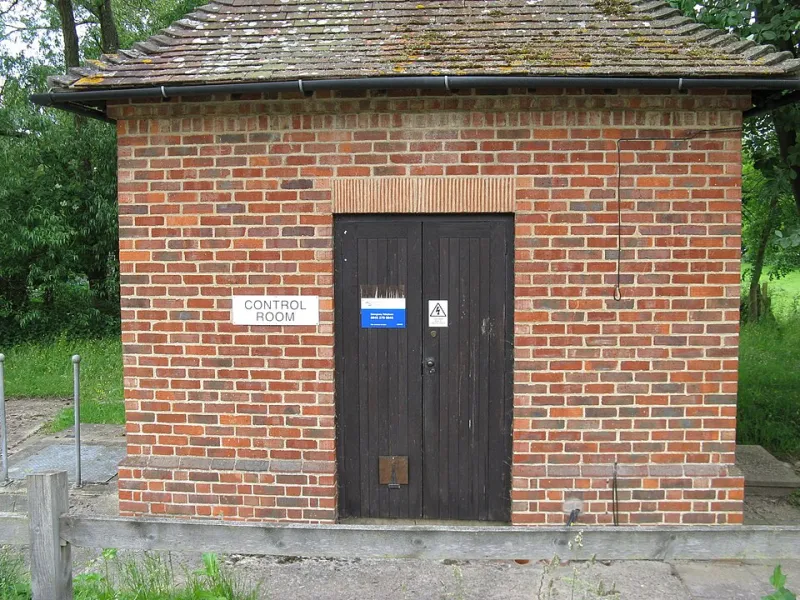
Photo: Dave Spicer , CC BY-SA 2.0, via Wikimedia Commons
In February 2021, a catastrophic winter storm swept across Texas and exposed what engineers and emergency planners had quietly warned about for years: the power grid was not the only thing that could fail. As rolling blackouts began, water treatment facilities lost the electricity needed to maintain pressure. Pipes froze and burst in homes unaccustomed to sustained subfreezing temperatures. Fuel distribution networks, dependent on electronic payment systems and climate-controlled pump mechanisms, began to falter. Grocery supply chains, already strained by pandemic-era logistics disruptions, buckled under simultaneous demand spikes and delivery failures.
The lights came back on within days. The water crisis persisted for weeks. The full scope of what had unraveled—and what had nearly unraveled further—took months to document. And yet, in the public conversation that followed, the dominant preparedness lesson absorbed by most Americans was a familiar one: keep the generator fueled and the flashlights charged.
This is the blind spot. And it may be the most dangerous gap in America's national readiness posture.
The Illusion of Isolated Systems
Modern infrastructure is not a collection of independent systems that occasionally interact. It is a densely interconnected network in which each component's functionality is contingent on the reliable operation of several others. Water treatment depends on electricity and chemical supply chains. Fuel distribution depends on telecommunications and electronic payment processing. Telecommunications depend on power and physical infrastructure maintenance. Food supply chains depend on fuel, refrigeration, and functional payment systems.
This interdependence is not incidental. It is the product of decades of efficiency optimization. Just-in-time supply chains, centralized processing facilities, and digitally integrated control systems have made American infrastructure extraordinarily productive under normal conditions. They have also made it extraordinarily brittle under stress.
The Department of Homeland Security's own critical infrastructure framework identifies sixteen distinct sectors, from energy and water to financial services and transportation. What the framework does not fully capture—and what most preparedness communication fails to convey—is the degree to which a significant disruption in any one sector propagates through the others with a speed and scope that defies linear planning assumptions.
Mapping the Cascade: Three Scenarios
To understand how cascading failure actually unfolds, it is worth tracing the logic of specific scenarios that go beyond the conventional power-outage narrative.
Scenario One: The Fuel Distribution Disruption
In May 2021, the Colonial Pipeline ransomware attack demonstrated how a single cyberattack on fuel distribution infrastructure could generate cascading shortages across the southeastern United States within seventy-two hours—without disabling a single power plant. Fuel shortages triggered panic buying, which overwhelmed retail distribution systems. Trucking operations dependent on diesel began curtailing routes, affecting food and medical supply deliveries. Backup generators at hospitals and data centers began drawing down fuel reserves. The power grid remained fully operational throughout. The disruption was nonetheless severe.
The lesson is precise: preparedness frameworks that begin and end with power generation leave households and local governments entirely unprepared for fuel-chain disruptions that the electrical grid cannot compensate for.
Scenario Two: The Water-Telecommunications Feedback Loop
Less widely understood is the dependency relationship between water infrastructure and telecommunications. Modern water treatment and distribution systems rely heavily on SCADA—Supervisory Control and Data Acquisition—networks to monitor pressure, chemical dosing, and pump operations. These networks require functioning telecommunications infrastructure to operate remotely. When a significant telecommunications outage occurs, water utilities lose remote monitoring capability. Operators must physically access facilities to maintain operations, dramatically increasing response time and personnel requirements. In a scenario where a telecommunications failure coincides with a water infrastructure stress event—a contamination incident, a major main break, or extreme weather—the compounding effect can overwhelm even well-resourced utilities.
Scenario Three: The Supply Chain and Payment System Collapse
Retail food distribution in the United States operates on inventory cycles measured in days, not weeks. The average grocery store carries approximately three days of inventory for high-demand staples. Point-of-sale systems, inventory management, and supplier coordination all depend on functioning telecommunications and electronic payment infrastructure. A regional telecommunications disruption of even forty-eight to seventy-two hours duration—without any power outage, without any physical infrastructure damage—is sufficient to generate meaningful food access disruptions in affected communities. Add a concurrent fuel distribution constraint, and the timeline for critical shortages compresses sharply.
Why Conventional Preparedness Messaging Falls Short
The dominant framework in American household preparedness communication—seventy-two hours of supplies, a flashlight, and a battery-powered radio—was designed for a simpler infrastructure era. It addresses the consequences of power loss competently. It addresses almost nothing else.
Government preparedness agencies bear some responsibility for this gap. Public communication campaigns have historically defaulted to the power-outage scenario because it is the most universally relatable and the easiest to address through simple consumer action. Explaining the interdependencies between SCADA network vulnerabilities, just-in-time fuel logistics, and municipal water pressure maintenance is considerably more difficult—and considerably more important.
Local governments are not exempt from this critique. Municipal emergency operations plans frequently silo infrastructure sectors, assigning responsibility for water, power, telecommunications, and transportation to separate departments that may not conduct joint scenario planning. The cascading failure scenarios that pose the greatest actual risk to communities are precisely the ones that require cross-sector coordination—coordination that, in many jurisdictions, has never been practiced.
A Framework for Thinking About Hidden Vulnerabilities
For households and local governments seeking to move beyond the flashlight paradigm, a more rigorous approach begins with dependency mapping: systematically identifying which essential services depend on which other systems, and where the single points of failure are concentrated.
At the household level, this means asking not just "what do I do without power?" but a more demanding set of questions. How does my household access water if municipal pressure fails? How do I obtain prescription medications if pharmacy refrigeration or payment systems are disrupted? How do I purchase food or fuel if electronic payment infrastructure is unavailable? How do I communicate with family members if cellular networks are congested or offline?
Each of these questions points toward a specific preparedness gap that conventional supply-kit guidance does not address. Water storage and filtration capacity. A supply of critical medications maintained beyond the standard thirty-day prescription cycle. Cash reserves sufficient for several days of essential purchases. A designated out-of-area communication contact and a non-digital communication protocol.
At the local government level, meaningful progress requires joint infrastructure vulnerability assessments that cross departmental boundaries. Emergency managers, public works directors, utility operators, and telecommunications coordinators must collectively map the dependency relationships between their systems and develop response protocols that account for multi-sector simultaneous stress. Tabletop exercises that simulate cascading failure scenarios—rather than single-sector outages—are an essential and underutilized tool.
The Preparedness Imperative
The Texas winter storm of 2021, the Colonial Pipeline attack, and a growing catalog of regional infrastructure stress events share a common lesson: the scenarios that cause the most sustained disruption to American communities are rarely the ones that preparedness culture has most thoroughly addressed.
Power outages are visible, comprehensible, and culturally familiar. Cascading infrastructure failures are diffuse, technically complex, and deeply counterintuitive to a public accustomed to thinking of infrastructure systems as independent and robust. Closing this gap requires a more honest and more sophisticated national conversation about how modern infrastructure actually functions—and how it actually fails.
America Prepared believes that an informed citizenry is the foundation of genuine national resilience. That foundation is not built on flashlights and spare batteries alone. It is built on the willingness to look clearly at the full architecture of vulnerability, ask harder questions, and prepare accordingly. The grid may stay up. That does not mean everything else will.