The Unprepared Mind: Confronting America's Mental Readiness Gap Before the Next Disaster Strikes
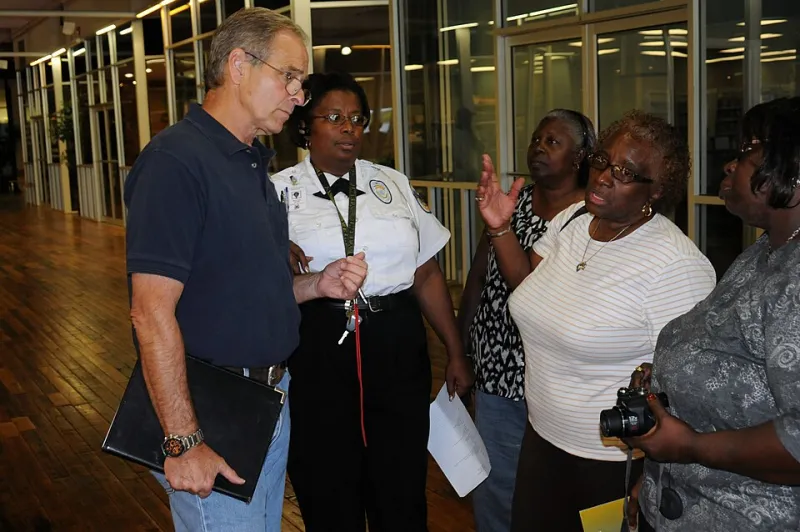
Photo: George Armstrong, Public domain, via Wikimedia Commons
Ask most Americans what emergency preparedness means, and they will describe something tangible: a bag packed with food and water, a flashlight with fresh batteries, perhaps a printed list of family emergency contacts. These are not wrong answers. Physical readiness matters. But they are incomplete ones—profoundly so.
What those answers omit is the organ most likely to determine whether a person survives a crisis with their decision-making capacity intact: the human brain. More specifically, the trained, conditioned, psychologically resilient brain. In the field of emergency management, this gap has a name. Practitioners call it the "psychological preparedness deficit," and by most credible measures, it represents one of the most consequential weaknesses in America's national readiness posture.
What Disaster Psychology Actually Tells Us
The research is both compelling and largely ignored by mainstream preparedness culture. Studies conducted in the aftermath of Hurricane Katrina, the September 11 attacks, and more recently the series of western wildfires that devastated communities across California and Oregon, consistently identify a common pattern: individuals who received some form of pre-event psychological preparation—even modest training in stress recognition and decision-making under pressure—demonstrated measurably better outcomes than those who did not.
They made faster, more rational decisions during the acute phase of a disaster. They were more likely to assist neighbors rather than retreat into panic. They recovered psychologically in shorter timeframes. And critically, they were more effective participants in community recovery efforts during the weeks and months that followed.
The mechanism behind these outcomes is reasonably well understood. Exposure to simulated stress—what psychologists term "stress inoculation"—activates the same neurological pathways triggered by real emergencies, but in a controlled environment where individuals can practice regulating their responses. Over time, this practice builds a kind of cognitive immunity: the trained individual enters a genuine crisis with a nervous system that has, in a meaningful sense, been there before.
Why This Remains a Fringe Conversation
Given the weight of evidence, one might reasonably ask why psychological preparedness training is not a standard feature of American civic life—taught in schools, reinforced in community centers, and funded with the same seriousness as physical infrastructure investment. The answer involves several overlapping failures.
First, there is the problem of visibility. A stockpile of emergency rations is concrete and photographable. A psychologically resilient community is neither. Policymakers and emergency management administrators naturally gravitate toward investments they can point to. Mental readiness, by contrast, is invisible until it is needed—and its absence is equally invisible until a disaster reveals it.
Second, mental health remains culturally stigmatized in ways that impede honest conversation about psychological vulnerability. Framing preparedness in terms of mental fitness can inadvertently trigger resistance from communities—particularly among demographics with historical reasons to distrust mental health institutions—that might otherwise embrace the practical, skills-based training being proposed.
Third, and perhaps most structurally significant, is the chronic underfunding of mental health components within federal emergency preparedness grants. FEMA's Hazard Mitigation Grant Program and related funding mechanisms overwhelmingly direct resources toward physical infrastructure. Community mental health preparedness initiatives compete for a comparatively thin slice of available funding, and they rarely win.
What a Genuine Psychological Preparedness Program Would Look Like
The good news is that effective models exist. The Community Emergency Response Team (CERT) program, which trains civilians in basic disaster response skills, has demonstrated that ordinary Americans are willing and capable of acquiring practical emergency competencies. Expanding that model to explicitly include psychological readiness training—stress recognition, peer psychological first aid, decision-making frameworks for high-pressure environments—would require relatively modest investment.
The American Red Cross has piloted psychological first aid training in several regions, with encouraging uptake. The Veterans Administration has developed stress inoculation protocols that, while designed for returning service members, contain elements directly applicable to civilian disaster preparedness. Academic centers specializing in disaster mental health, including programs at Johns Hopkins and the University of South Carolina's Arnold School of Public Health, have produced scalable curricula that remain underutilized by state and local emergency management agencies.
What is missing is not knowledge or methodology. It is the institutional will to treat psychological preparedness as a first-tier priority rather than an afterthought.
Mutual Aid and the Psychology of Collective Resilience
There is a dimension to this conversation that extends beyond individual mental fitness. Community psychological preparedness—the collective capacity of a neighborhood, town, or region to maintain social cohesion and functional mutual aid networks under stress—may ultimately matter more than any individual's psychological conditioning.
Research on disaster-resilient communities consistently identifies social connectedness as the single strongest predictor of recovery outcomes. Communities where residents know their neighbors, trust local institutions, and have practiced cooperative behavior prior to a disaster recover faster and with less lasting harm than communities where those bonds are absent. This is not sentiment. It is data.
Building that social infrastructure requires deliberate, sustained investment in community engagement—precisely the kind of investment that preparedness programs rarely prioritize. Neighborhood emergency preparedness meetings, community resilience workshops, and civic mutual aid training all serve dual functions: they impart practical skills while simultaneously strengthening the relational fabric that makes those skills deployable under pressure.
The Case for Acting Now
America will face future disasters. That is not pessimism; it is actuarial certainty. Climate change is intensifying the frequency and severity of weather-related emergencies. The threat landscape for infrastructure and public health continues to evolve. The question is not whether communities will be tested, but whether they will be ready when the test arrives.
Physical readiness—the go-bags, the evacuation routes, the emergency stockpiles—will always be necessary. But a nation that has invested heavily in material preparedness while neglecting the psychological foundations of human resilience has built a structure on an incomplete foundation.
The prepared mind is not a luxury. It is the precondition for everything else.