Poisoned at the Source: The Growing Cyber Threat to America's Drinking Water Infrastructure
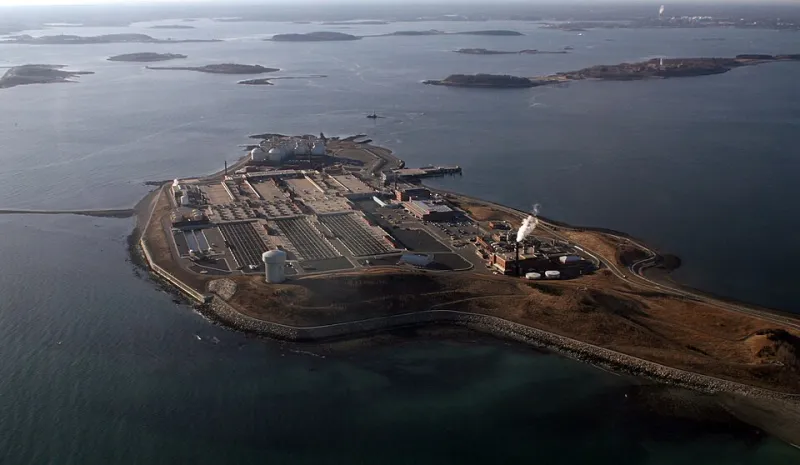
Photo: Doc Searls, CC BY-SA 2.0, via Wikimedia Commons
Water flows from the tap so reliably that most Americans never pause to consider the complex, increasingly digitized infrastructure that makes it possible. Behind that effortless convenience lies a network of pumps, chemical dosing systems, filtration equipment, and supervisory control software — all of it now connected, to varying degrees, to the internet. That connectivity, which has made water management more efficient and cost-effective, has also opened a dangerous door.
Cyberattacks targeting water treatment facilities are no longer theoretical. They are documented, recurring, and growing in sophistication. The question facing American communities is not whether their water systems can be targeted, but whether they are prepared to withstand and recover from an attack before public health consequences become irreversible.
A Threat That Has Already Arrived
In February 2021, an operator at the Oldsmar, Florida water treatment plant watched in real time as an unknown actor remotely accessed the facility's control system and attempted to increase sodium hydroxide — commonly known as lye — to levels more than one hundred times the safe concentration. A vigilant employee caught the manipulation and reversed it within minutes. Had the change gone unnoticed, residents could have consumed water capable of causing severe chemical burns to internal tissue.
Oldsmar was not an isolated incident. In 2020, Israeli water authority systems were targeted in a cyberattack that, according to officials, sought to manipulate chlorine levels. In 2021, a ransomware attack struck a water utility serving parts of the San Francisco Bay Area. Researchers tracking industrial control system vulnerabilities have identified hundreds of water facilities across the United States operating with outdated software, default passwords, and remote access protocols that lack basic authentication safeguards.
The Environmental Protection Agency and the Cybersecurity and Infrastructure Security Agency have both issued formal warnings about the sector's exposure. Yet the response from many municipalities has been sluggish, constrained by limited budgets, competing priorities, and a persistent — and dangerous — assumption that small or mid-sized utilities are too obscure to attract serious adversaries.
Why Water Systems Are Particularly Vulnerable
The water sector presents a uniquely challenging cybersecurity landscape. Unlike financial institutions or defense contractors, most water utilities operate with lean staffs and modest technology budgets. Many rely on legacy industrial control systems — known as SCADA systems — that were designed decades ago without cybersecurity in mind and were never intended to be connected to external networks.
The fragmentation of the sector compounds the problem. The United States has approximately 148,000 public water systems, the vast majority of which serve fewer than 10,000 people. These smaller utilities often lack dedicated IT personnel, let alone cybersecurity specialists. They may share login credentials among staff, use consumer-grade routers to connect critical systems, and operate without incident response plans of any kind.
The consequences of a successful attack extend far beyond contaminated water. Water supports hospitals, fire suppression, food production, and sanitation. A sustained disruption — whether through contamination, infrastructure damage, or ransomware that locks operators out of control systems — could trigger cascading public health emergencies that overwhelm local response capacity within days.
The Adversaries Behind the Threat
The actors targeting water infrastructure range from opportunistic criminal groups seeking ransom payments to state-sponsored operatives conducting reconnaissance or preparing for future escalation. Nation-state actors from countries including China, Russia, and Iran have been linked to probing activity against American critical infrastructure, with water systems identified as a strategic target category.
For criminal ransomware groups, water utilities represent attractive targets precisely because of their essential nature. A city cannot simply wait out a ransomware demand when taps run dry. The pressure to restore operations quickly creates leverage that attackers are prepared to exploit. Several utilities have quietly paid ransoms in recent years rather than risk prolonged service disruptions — a pattern that security experts warn only encourages further attacks.
What Resilient Communities Are Doing Differently
Amid the vulnerabilities, a cohort of forward-thinking utilities and municipalities has begun implementing meaningful defenses. Their approaches offer a practical roadmap for communities that cannot wait for federal mandates to materialize.
Network segmentation stands as one of the most effective and accessible protective measures. By isolating operational technology systems — the equipment that directly controls physical processes — from administrative networks and the broader internet, utilities can dramatically reduce the attack surface available to intruders. This architectural change does not require cutting-edge technology; it requires deliberate planning and disciplined implementation.
Multi-factor authentication for all remote access points has become a baseline expectation among security professionals, yet its adoption across the water sector remains inconsistent. Requiring a second form of verification before any remote user can access control systems closes one of the most commonly exploited entry points.
Regular tabletop exercises simulating cyberattack scenarios allow utility operators and local emergency managers to identify gaps in their response plans before a real incident exposes them. Several regional water associations have begun coordinating these exercises across member utilities, allowing smaller systems to benefit from shared expertise and resources.
Manual override capability — the ability to operate critical systems without digital controls — represents a foundational resilience measure that some utilities have allowed to atrophy as automation has expanded. Maintaining trained staff and physical infrastructure capable of manual operation ensures that a cyber disruption does not automatically translate into a service collapse.
The Household Dimension of Water Resilience
Civic preparedness does not begin and end with government action. Individual households bear a meaningful share of responsibility for their own resilience, particularly in the early hours and days of a water emergency when public systems may be compromised or communication may be limited.
Federal guidance recommends storing at least one gallon of water per person per day for a minimum of three days, with two weeks of supply representing a more robust standard for households with the capacity to maintain it. Water purification tablets, portable filtration devices, and the knowledge to boil water safely are practical investments that cost little but provide significant protection during a contamination event.
Families should also identify their local water utility's emergency notification channels — whether text alerts, website updates, or local broadcast partnerships — and ensure they are enrolled to receive timely advisories. In a scenario where water safety is compromised, the speed of that notification could determine health outcomes.
A Call for Urgency, Not Alarm
The vulnerabilities in America's water infrastructure are serious, but they are not insurmountable. The combination of targeted federal investment, sector-wide adoption of cybersecurity best practices, and engaged local communities creates a defensible posture — one that acknowledges the threat without surrendering to it.
What this moment demands is the rejection of complacency. Every day that a water utility operates without basic cybersecurity hygiene is a day that adversaries — foreign and domestic — retain an open invitation. Every household that has made no provision for a water emergency is one disruption away from a preventable crisis.
Strengthening the security of America's water systems is, at its core, an act of civic commitment. It is the recognition that the infrastructure we share is only as resilient as the attention and resources we collectively devote to protecting it. The water flowing from American taps is not simply a convenience — it is a foundation of public health, community function, and national security. Treating it as such is not optional. It is a responsibility that this moment demands we accept.